

How To Use Makeup To Get White Skin
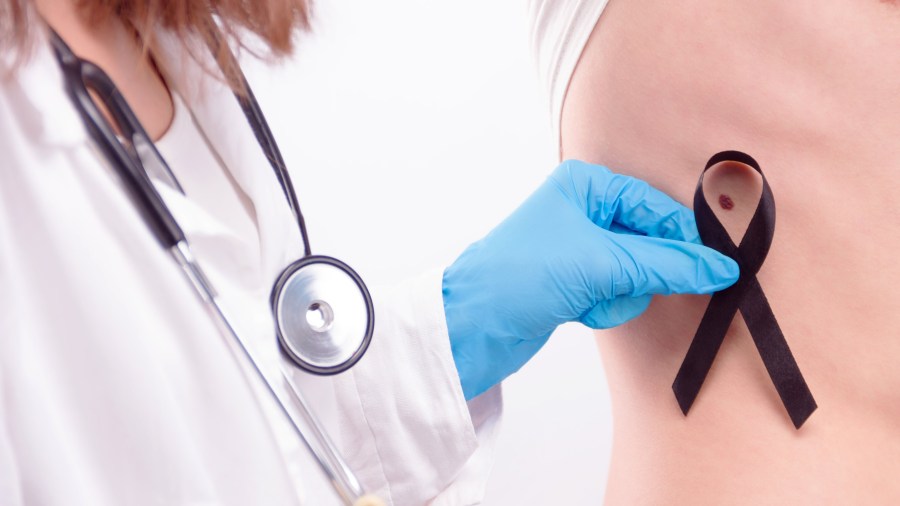
Skin cancer is the almost common type of cancer in the United States by a pretty large margin, and it does not discriminate. Information technology affects people of all races, genders and ages, which is why it's admittedly disquisitional for Americans to learn about the dissimilar types of skin cancer and how to spot them. Fortunately, about types of peel cancer are highly treatable, but early detection and diagnosis are crucial to achieving the all-time outcome.
For any type of pare cancer, the first line of defense is adequate protection against the sunday's harmful UV rays. This consists of using high-SPF sunscreens on exposed parts of your body anytime you lot're outdoors likewise as wearing hats, sunglasses, and long sleeves and pants if you can tolerate the oestrus. These measures aren't always successful, so y'all need to know how to spot abnormalities to ensure quick, efficient handling.
Basal Cell Carcinoma
Starting in the basal cells in the lower epidermis (outer layer of the skin), basal jail cell carcinoma is the most common blazon of skin cancer. In fact, it accounts for nigh lxxx% of all cases of skin cancer, according to the American Cancer Society. This type of skin cancer is more likely to occur in people with off-white pare, simply anyone tin develop basal jail cell carcinoma. The most significant risk factor is frequent exposure to the sun or tanning beds.
Basal jail cell carcinoma is very treatable and has a skillful prognosis, but early on diagnosis and treatment are important to prevent information technology from spreading to surrounding tissues. Common characteristics of basal jail cell carcinoma include raised patches that may itch, pearly looking bumps, pale patches that resemble a scar, and open sores that won't heal. In nigh cases, it's found on the face, neck, arms and other areas frequently exposed to the sun, but it could also announced on the torso and legs.
Squamous Cell Carcinoma
Squamous cell carcinoma is the second most common type of skin cancer, accounting for about 20% of cases. Unlike basal cell carcinoma, which typically affects the outer layers of the skin, squamous cell carcinoma tin can grow in deeper layers of the pare. This blazon of skin cancer as well occurs most frequently on parts of the body that are frequently exposed to the sun, such as the ears, face up, neck and arms.
A more troublesome grade of squamous prison cell carcinoma that is linked to the human papillomavirus (HPV) affects the mucous membranes or the genital area. Left untreated, squamous cell carcinoma can spread to other parts of the body and cause severe damage and disfigurement due to deeper penetration into the pare. Mutual characteristics include raised lumps, scaly red patches, growths that resemble warts, and sores that heal only then re-open.
Melanoma
Accounting for only about one% of all skin cancer cases, melanoma is non a common type of peel cancer, but it'due south definitely the deadliest class because of its fast growth and ability to spread to other organs. Information technology starts in the melanocytes, usually on the dorsum, breast or legs, simply it can develop anywhere on the torso. The face up, cervix, hands, feet and nail beds can also be sites for melanoma. This type of skin cancer typically starts in an existing mole or beginning appears equally a new dark spot or mole on the pare, which is why moles should always be monitored carefully.
Doctors utilise the ABCDE warning sign model to help patients identify potential trouble moles: Asymmetry, Edge, Colour, Diameter and Evolving. An asymmetrical mole is misshapen with sides that don't friction match. A problem mole doesn't accept a conspicuously divers edge and could have jagged, uneven edges with pigment that spreads into the surrounding pare. Moles should only be a single color. If a mole isn't the same color throughout and includes shades of tan, brown, black and even red or white, it could signal a trouble. If the mole is greater than six mm in diameter or suddenly increases in size, it should be checked. Evolving refers to changes; if the mole has changed in appearance in the past weeks or months, it could be cause for business concern.
Rare Skin Cancers
Several other types of peel cancer exist but are extremely rare, accounting for less than 1% of all skin cancers when grouped together. Merkel cell carcinoma affects neuroendocrine (Merkel) cells nearly the nerve endings in the epidermis. Although it'due south rare, this type of pare cancer is unsafe due to its ability to spread to other organs and the difficulty of treating information technology after it spreads.
Kaposi sarcoma is a rare grade of cancer that ofttimes appears as red, majestic or brown tumors on the peel or in the mouth. The cells that form the cancer originate in the lining of the lymph nodes or blood vessels. If the tumors spread to critical organs like the lungs or liver, it could be life threatening.
Skin lymphoma is a type of not-Hodgkin'southward lymphoma. To be a peel lymphoma, the cancer must offset in the lymphocytes in the peel and not travel to the peel from other organs. Survival rates for skin lymphomas vary, depending on the verbal blazon and the response to treatment.
Squamous Jail cell Precancers
Squamous cell precancers serve as warning signs for skin conditions that could potentially plough into pare cancer. Virtually all of them are linked to UV sun exposure, and it'south important to monitor them closely to ensure an early diagnosis and treatment if the precancers become cancerous.
Actinic keratoses look like dry, scaly patches that develop on older adults who have had decades of sun exposure. Keratoacanthoma tumors are dome-shaped and grow chop-chop at kickoff merely then stabilize. They closely resemble squamous cell carcinoma. Bowen disease looks similar to eczema or psoriasis, forming red-brown, scaly patches on the surface of the skin.
Resources Links:
https://www.cancer.org/cancer/skin-cancer.html
https://www.cancer.org/cancer/basal-and-squamous-jail cell-skin-cancer/nigh/what-is-basal-and-squamous-cell.html
https://www.cancer.org/cancer/basal-and-squamous-cell-pare-cancer/detection-diagnosis-staging/signs-and-symptoms.html
https://www.cancer.org/cancer/melanoma-peel-cancer/about/what-is-melanoma.html
https://world wide web.cancer.org/cancer/melanoma-skin-cancer/about/cardinal-statistics.html
https://www.cancer.org/cancer/merkel-jail cell-peel-cancer/almost/what-is-merkel-jail cell-carcinoma.html
https://www.cancer.org/cancer/kaposi-sarcoma/about/what-is-kaposi-sarcoma.html
https://world wide web.cancer.org/cancer/skin-lymphoma/about/what-is-lymphoma-of-the-pare.html
Source: https://www.symptomfind.com/healthy-living/different-types-of-skin-cancer?utm_content=params%3Ao%3D740013%26ad%3DdirN%26qo%3DserpIndex
Posted by: hopkinsextooke.blogspot.com
0 Response to "How To Use Makeup To Get White Skin"
Post a Comment